Dansk
- English
- Español
- Português
- русский
- Français
- 日本語
- Deutsch
- tiếng Việt
- Italiano
- Nederlands
- ภาษาไทย
- Polski
- 한국어
- Svenska
- magyar
- Malay
- বাংলা ভাষার
- Dansk
- Suomi
- हिन्दी
- Pilipino
- Türkçe
- Gaeilge
- العربية
- Indonesia
- Norsk
- تمل
- český
- ελληνικά
- український
- Javanese
- فارسی
- தமிழ்
- తెలుగు
- नेपाली
- Burmese
- български
- ລາວ
- Latine
- Қазақша
- Euskal
- Azərbaycan
- Slovenský jazyk
- Македонски
- Lietuvos
- Eesti Keel
- Română
- Slovenski
- मराठी
- Srpski језик

Three-phase power transformer: the core hub and technological evolution of modern power systems
As an indispensable key electrical equipment in modern power systems, three-phase power transformers undertake the core functions of power transmission, voltage conversion and impedance matching. Whether in the step-up output of large power plants, ultra-high voltage transmission in cross-regional power grids, or step-down power distribution for end users, three-phase power transformers play the role of "power hubs". With the transformation of the global energy structure and the upgrading of industrial technology, three-phase power transformers are accelerating their evolution towards large capacity, high energy efficiency, intelligence and environmental protection.
I. Product Overview
1. Three-phase power transformer is the key equipment responsible for voltage conversion, power transmission and distribution in the power transmission and distribution system. It consists of three single-phase transformer magnetic circuits or an integrated three-phase core with a phase difference of 120°. Both high-voltage and low-voltage windings have a three-phase structure. It is widely used to reduce 10(6)/35kV high voltage to 0.4kV low voltage (or vice versa), providing stable and reliable power supply for industrial and mining enterprises, buildings, public facilities and new energy stations.
Compared with single-phase transformer groups, three-phase integrated transformers have the advantages of high material utilization, small size, low loss, and economical operation. They are the most widely used transformer type in modern power systems.
2. Core structure and working principle
The operation of the three-phase power transformer is based on Faraday's law of electromagnetic induction, and voltage regulation is achieved through the energy conversion process of "electromagnetism-electricity". Its core components include an iron core made of stacked high-permeability silicon steel sheets, and high-voltage and low-voltage windings set on the iron core columns. When three-phase alternating current flows into the primary winding, alternating magnetic flux will be generated in the iron core, and an electromotive force will be induced in the secondary winding. By changing the turns ratio of the primary and secondary windings, the voltage can be stepped up or down accurately.
In order to ensure the safe and stable operation of the equipment, modern three-phase transformers are equipped with complete auxiliary systems. In oil-immersed transformers, special insulating oil not only serves as the main insulating medium, but also plays a cooling and protective role in absorbing heat from the iron core and windings and delaying the aging of insulating materials. With the oil conservator, gas relay, pressure release valve and intelligent temperature control system, it can monitor the status of the equipment in real time and respond quickly to internal faults. In dry-type transformers, high heat-resistant insulation materials and forced air cooling technology are used to meet application scenarios with extremely high fire protection requirements such as urban dense areas and high-rise buildings.
II. Main product categories
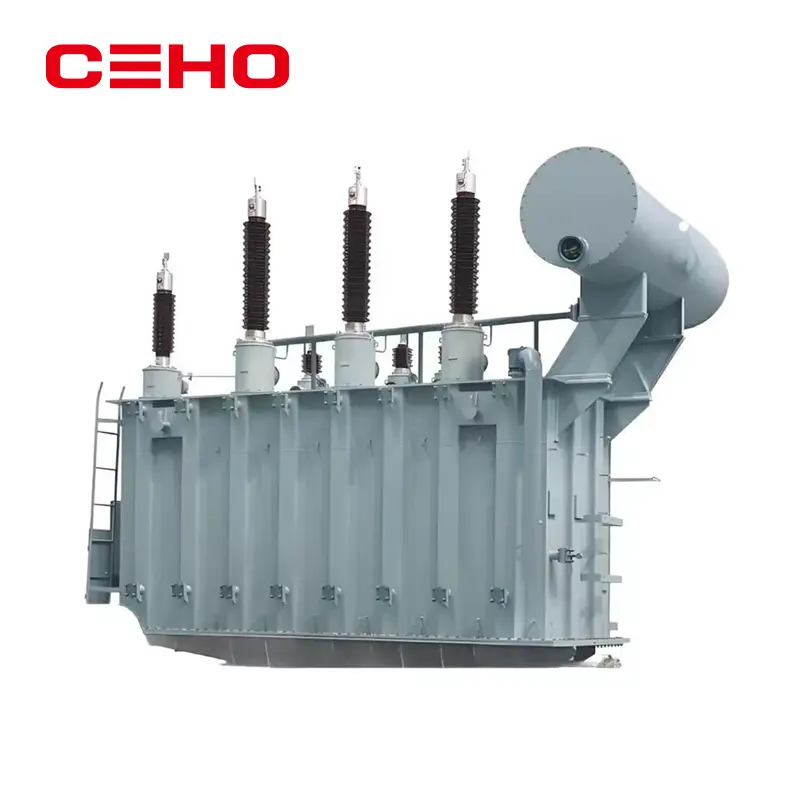
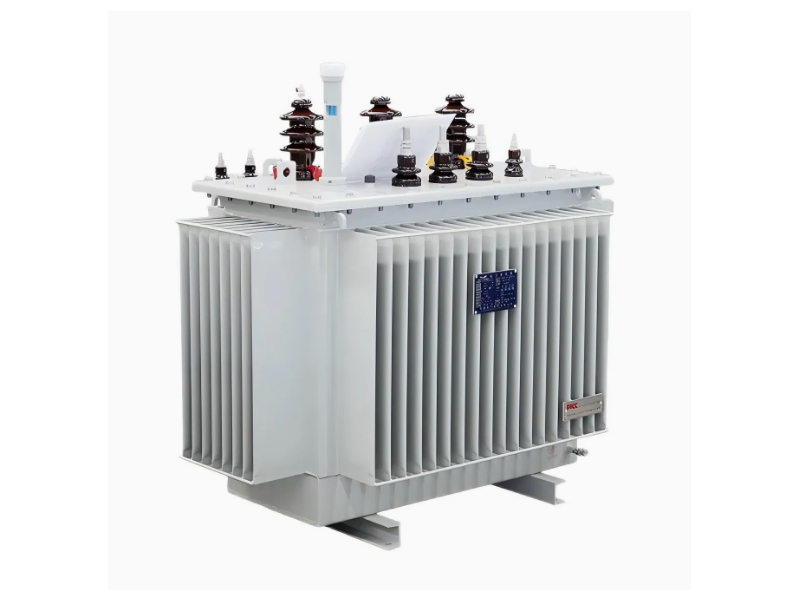
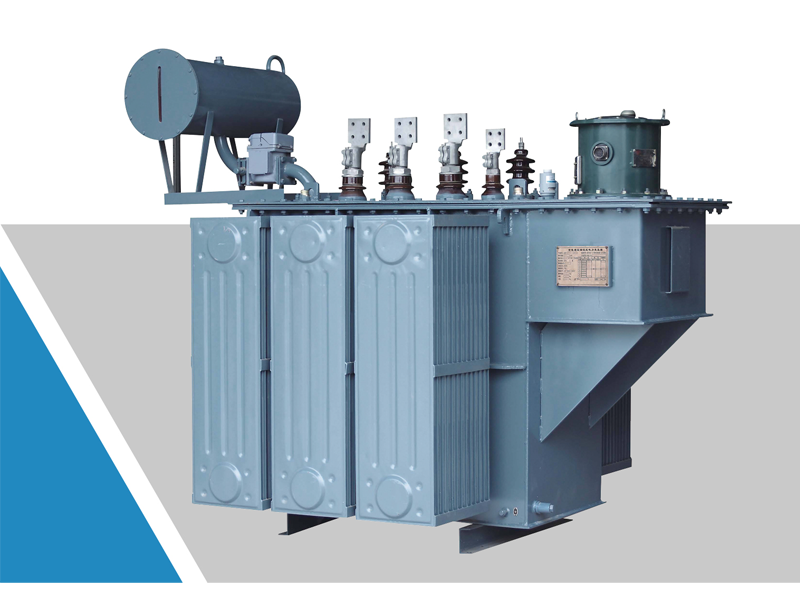
1. Three-phase oil-immersed power transformer (S11/S13/S20/S22 series)
Structural features: The iron core is made of multi-stage laminations of highly permeable oriented silicon steel sheets, and the high/low voltage windings are usually wound with oxygen-free copper wire or copper foil; mineral insulating oil (10#/25#/45#) is used as both insulation and heat dissipation medium; the fully sealed corrugated oil tank can effectively isolate air and moisture.
Cooling method: ONAN (oil-immersed self-cooling), large capacity can be equipped with forced air cooling.
Applicable scenarios: outdoor substations, industrial parks, rural power grid transformation, box-type substations, photovoltaic/wind power grid connection, etc.
2. Three-phase dry power transformer (SCB11/SCB14/SCB18 series)
Structural features: It adopts epoxy resin vacuum casting (SCB type) or impregnation (SG type) process, no insulating oil, flame retardant, explosion-proof, low noise, usually equipped with IP20 or above protective shell and temperature-controlled fan.
Applicable scenarios: High-rise building power distribution rooms, underground shopping malls, hospitals, data centers, subways, airports and other indoor places with high fire protection and environmental protection requirements.
3. Special three-phase transformer
Including amorphous alloy energy-saving transformers (SH15/SCBH15), on-load voltage regulating transformers (SZ series), rectifier transformers, mining explosion-proof transformers (KBSG) and new energy-specific step-up transformers, etc., which can be customized according to working conditions.
III. Core technical parameters
|
Parameter item |
Typical values/description |
|
Rated capacity |
30~2500kVA (distribution level), larger capacity can reach dozens of MVA |
|
Voltage Combination |
High voltage 6/10/35kV ±2×2.5%, low voltage 0.4kV |
|
Rated frequency |
50Hz (domestic)/60Hz (export) |
|
link group |
Dyn11 (mainstream, can suppress the 3rd harmonic) or Yyn0 |
|
short circuit impedance |
4% (≤630kVA) ~ 6% (≥800kVA) |
|
No-load/load loss |
Decreases gradually with energy efficiency level (S20/S22, SCB14/SCB18) |
|
Insulation level |
Grade A (oil change) / Grade F or H (dry change) |
|
Cooling method |
ONAN (oil change); AN/AF (dry change natural/forced air cooling) |
|
Operating environment |
-25℃~+40℃, altitude ≤1000m, humidity ≤90% |
*The nameplate parameters should comply with relevant standards such as GB 1094 "Power Transformer" and GB/T 6451 / GB/T 10228.
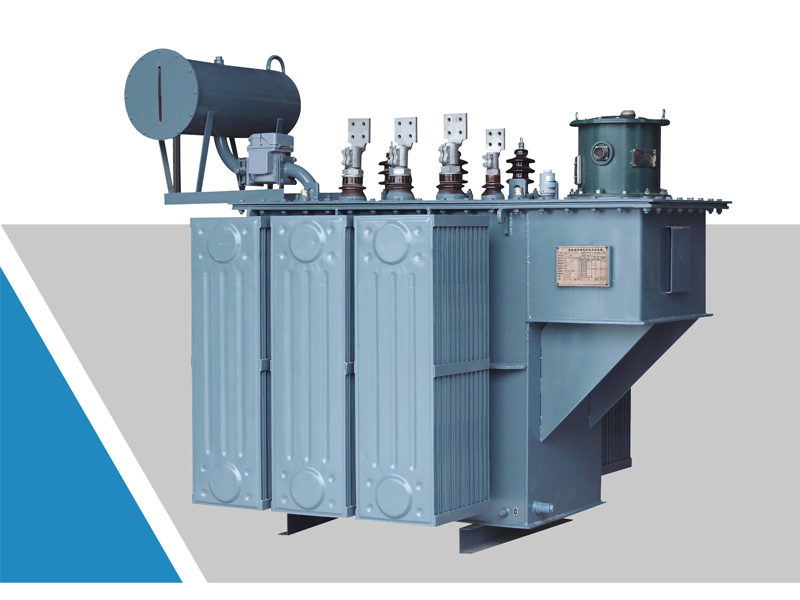
Three phase oil immersed on load voltage regulating transformer
IV. Product advantages
- High efficiency and energy saving: The new generation of S20/S22 oil-immersed and SCB14/SCB18 dry-type transformers have significantly lower no-load losses than older products, meeting the national energy efficiency requirements of Level 2 and above.
- Reliable operation: fully sealed structure design prevents oil oxidation and moisture; the winding adopts copper conductors and reinforcement technology, which has strong short circuit resistance.
- Safety and environmental protection: Dry-type transformers are oil-free and non-flammable, suitable for densely populated areas; oil-immersed transformers are fully sealed and leak-proof, and are equipped with multiple protections such as pressure release valves and gas relays.
- Easy maintenance: the oil-immersed fully sealed type can eliminate the need for oil changes during operation; dry-type transformers basically only require regular dust removal and temperature monitoring.
V. Suggestions for selection
- Outdoor/independent power distribution room/large capacity (≥1000kVA) → Give priority to three-phase oil-immersed transformer (S13/S20/S22), which has good economy and strong overload capacity.
- Indoors/basement/densely populated/high fire protection requirements → A three-phase dry-type transformer (SCB14/SCB18) is a must, which is oil-free and safer.
- Pay attention to energy saving in long-term operation → Consider amorphous alloy oil transformer (SH15) or amorphous alloy dry transformer (SCBH15).
- Areas with large load fluctuations or unstable voltage → Optional on-load voltage regulation type (SZ series).
VI. Technological breakthroughs and performance optimization
In recent years, our country has made world-renowned achievements in the development of three-phase power transformers. Taking the country's first 220-kV power transformer with the largest three-phase one-million-unit capacity as an example, the R&D team successfully overcame the overheating problem of structural parts caused by high magnetic flux leakage through innovative electromagnetic calculation methods and winding structure optimization. At the same time, the application of the new cooling oil guide structure and magnetic shielding technology has greatly improved the product's efficient heat dissipation and low-loss operation capabilities. These technological breakthroughs not only fill the domestic gap, but also bring my country's manufacturing level in the field of large-capacity, high-voltage transformers to the forefront of the world.
In terms of materials and design, new generation transformers generally use low-loss silicon steel sheets and the vacuum pressure impregnation (VPI) process, which effectively reduces no-load current and partial discharge. For complex working conditions, some products also introduce multi-layer electromagnetic shielding structures and high-performance harmonic suppression modules to control the total harmonic distortion (THD) of the output voltage at an extremely low level, providing pure and stable power guarantee for precision manufacturing, medical equipment and other fields that have strict requirements on power supply quality.
VII. Diversified application scenarios and customized development
The application of three-phase power transformers has already broken through the scope of traditional power grids and has been deeply integrated into various emerging and special scenarios. In the field of new energy, whether it is the step-up and grid connection of distributed photovoltaic, or the humidity and heat-resistant power supply of wind farms, special transformers have demonstrated strong environmental adaptability; in transnational industrial cooperation, customized three-phase transformers have become a "bridge" to ensure the stable operation of imported equipment in response to differences in grid standards in different countries (such as the voltage adaptation of China and India power grids).
Facing harsh environments such as high altitudes and extreme temperature differences, modern transformers ensure long-term reliable operation under conditions of thin air and strong ultraviolet rays by optimizing cooling air ducts, enhancing insulation and anti-UV capabilities, and adopting anti-salt spray corrosion designs. In addition, with the integration of IoT technology, smart transformers equipped with 5G communication modules have been able to realize real-time cloud data monitoring, fault warning and remote diagnosis, promoting the transformation of equipment operation and maintenance from "passive repair" to "active prevention".
VIII. Green transformation and future prospects
Driven by the "dual carbon" goal, the energy efficiency standards of three-phase power transformers are being comprehensively upgraded. The latest national standards divide transformer energy efficiency into multiple levels. First-level energy efficiency products can recover the initial investment price difference in a short time due to their extremely low copper loss and iron loss. At the same time, the promotion and application of environmentally friendly insulation materials (such as synthetic ester oil and silicone oil) have effectively reduced the risk of soil and water pollution caused by mineral oil leakage.
Looking to the future, three-phase power transformers will no longer be just static power conversion equipment, but will evolve in a more intelligent, green, and flexible direction. With the rapid development of UHV power transmission, smart microgrids and energy storage systems, three-phase power transformers will continue to play an irreplaceable cornerstone role in building a clean, efficient and safe new energy system.
Relaterede nyheder
- Why can three-dimensional wound core transformer achieve low noise and energy saving?
- Why can't dry-type transformers be stored and transported upside down for a long time?
- What are the methods and steps for wiring dry-type transformers?
- What Makes the “Heart” of the Power System Beat Steadily?
- Why is my oil-immersed transformer overheating?
- How can the lifespan of distribution transformers be extended through routine maintenance?
Efterlad mig en besked